TOP 5 Heat Sinks TOP 5 Low Profile Heat Sinks TOP 5 Liquid Coolers
Heatsinks by Brand / Mfgr Reviews + Articless Advanced Search
|
TOP 5 Heat Sinks TOP 5 Low Profile Heat Sinks TOP 5 Liquid Coolers Heatsinks by Brand / Mfgr Reviews + Articless Advanced Search |
Surface Mapped Athlon - Is Lapping Required?
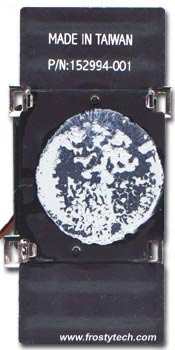
Surface Flatness of Processor Plate : Considering that the aluminum plate resting overtop the CPU die and L2 cache is the main place most of us will attach a heatsink - regardless of whether or not the Athlon has been cracked open to attach a GFD device - we decided to take a very close look at it. This plate has been termed the 'processor heatspreader', and is the main interface for many types of Athlon heatsinks. With that in mind, the importance of this plate in transferring as much of the heat generated by the CPU as possible cannot be under emphasized - especially for the overclocker. Likewise if liquid cooling is being used (such as the MC2000 cold plate, or a Senfu variation) the cold plate should make perfect contact with the entire aluminum plate. Poor contact simply means the investment in the cooling device is being wasted - a bit anyway. With the goo wiped off we just looked at the plate first of all. Visually it appeared to be very flat, with a smooth surface, but what the eyes couldn't tell us the micrometer would...
|
 |
|
| |||||||||||||||||||||||||||
|
Find a Heatsink . Latest Heatsink Reviews . Top 5 Heatsinks Tested . Top 5 Low Profile Heatsinks . Top 5 Liquid Coolers . Heatsinks by Mfgr / Brand |
Social Media |
FrostyTech.com Info . Feedback . Contact Us / Heatsink Submissions . Submit News . Privacy Policy |
 | |
© Copyright 1999-2025 www.frostytech.com All Rights Reserved. Privacy policy and Terms of Use Images © FrostyTech.com and may not be reproduced without express written permission. Current students and faculty of accredited Universities may use Frostytech images in research papers and thesis, provided each image is attributed. | ||||